
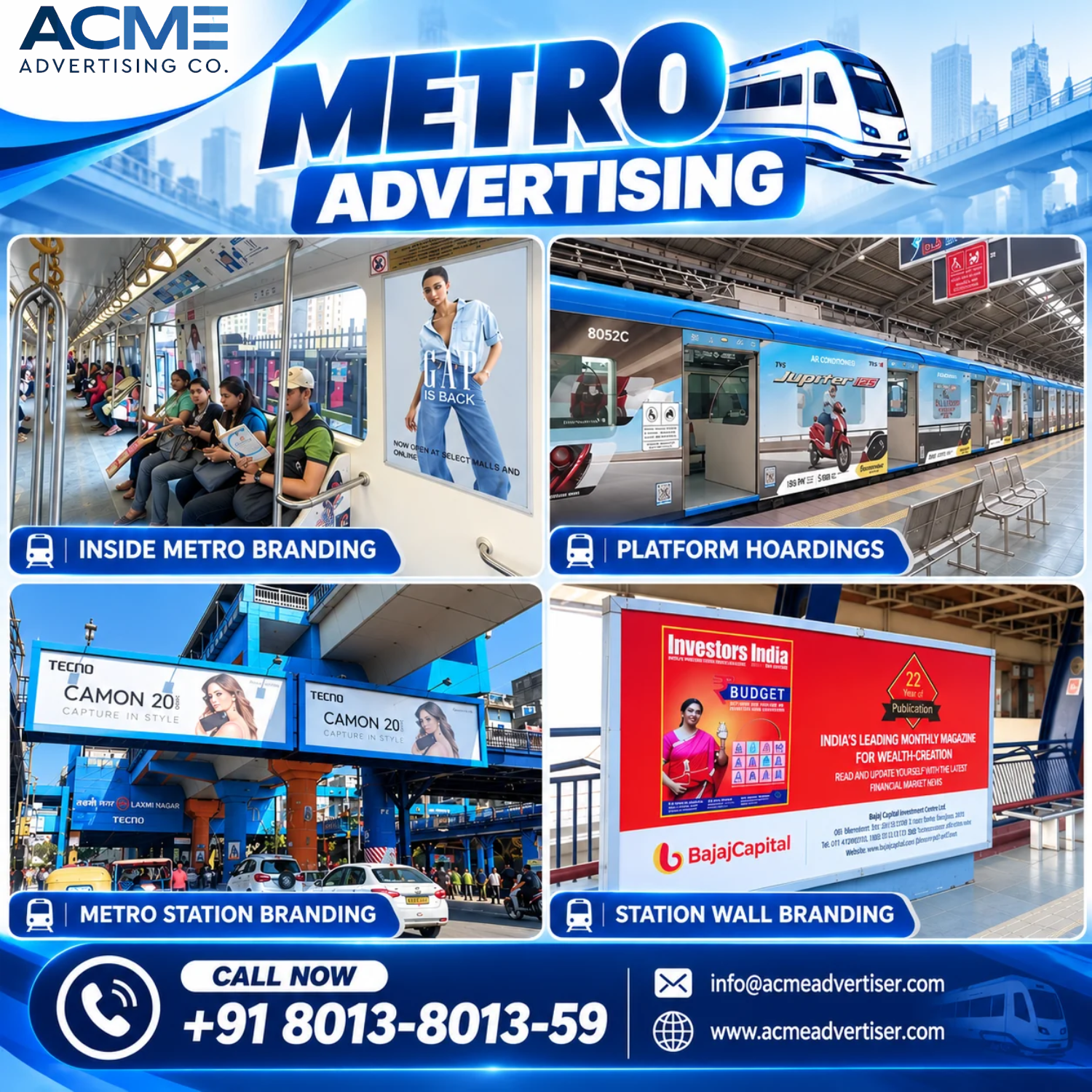
Metro advertising has become an important part of outdoor marketing for businesses looking to connect with large urban audiences. With thousands of passengers using metro networks every day, advertising inside and around metro stations provides brands with opportunities to reach commuters during their daily journeys.
In India, expanding metro connectivity has changed how people travel across major cities. Delhi, Mumbai, Bengaluru, Hyderabad, Chennai, Kolkata, and other urban centres have developed busy metro corridors that connect residential areas, business districts, educational institutions, and commercial destinations. These networks create valuable advertising environments for brands seeking consistent public visibility.
Understanding Metro Advertising
Metro advertising refers to promotional displays placed inside metro trains, at stations, on platforms, within concourses, and across other approved metro premises. It includes several formats designed to communicate brand messages to passengers while they travel or wait for their trains.
Unlike conventional roadside advertising, metro advertising reaches audiences in a structured transport environment. Passengers may encounter advertisements while entering stations, purchasing tickets, waiting on platforms, travelling inside coaches, or exiting at their destinations.
This repeated exposure can help businesses strengthen brand recognition and communicate promotional messages to urban consumers.
Different Formats of Metro Advertising
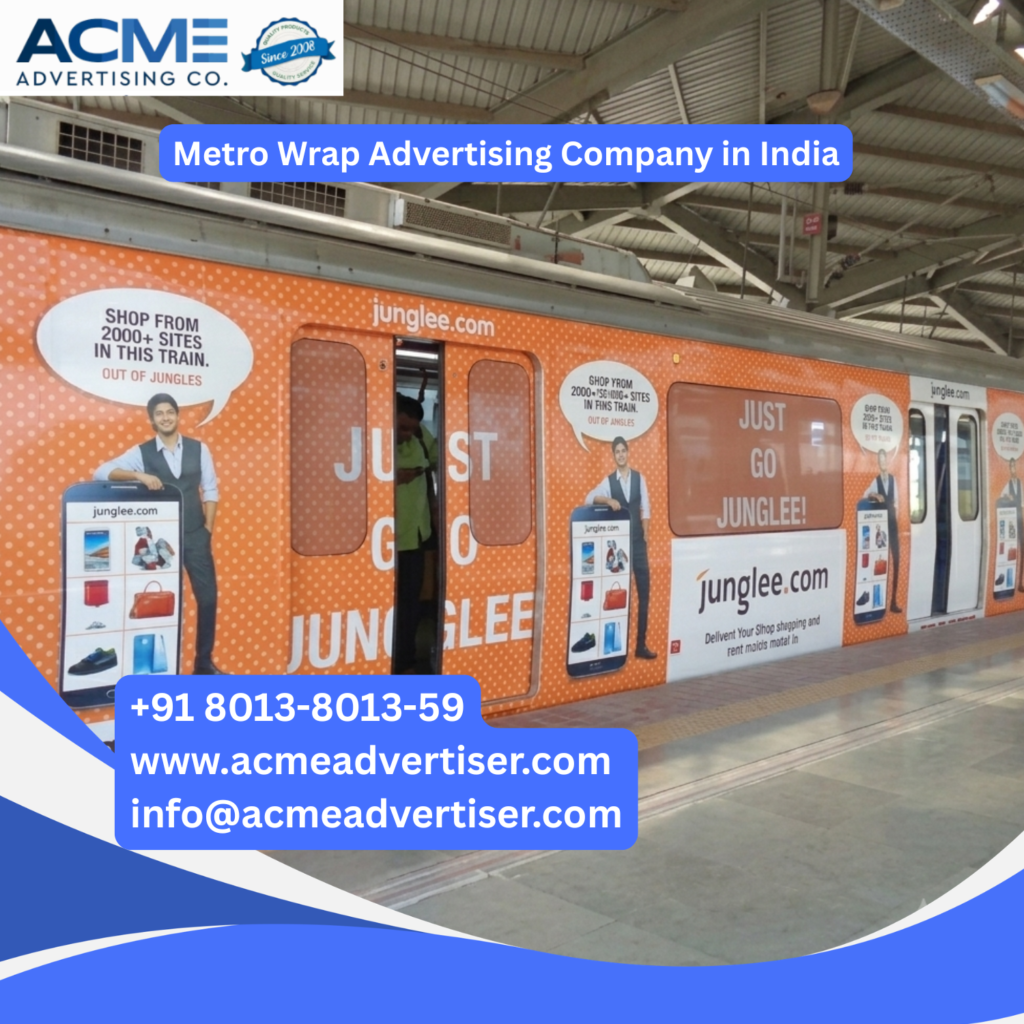
Metro networks offer multiple advertising opportunities depending on the available inventory and campaign requirements.
- Train branding: Exterior or interior branding that uses approved surfaces of metro coaches to display campaign creatives.
- Inside-train advertising: Panels, posters, and other designated advertising spaces inside metro coaches.
- Station branding: Promotional displays across approved station areas, including entrances, corridors, and concourses.
- Platform advertising: Displays positioned in designated passenger waiting areas.
- Digital screen advertising: Electronic displays used for promotional videos, brand messages, and scheduled campaigns.
- Pillar and wall branding: Advertisements placed on approved structural surfaces within metro premises.
Each format offers a different viewing experience. Businesses can select individual placements or combine multiple formats to create a coordinated campaign.
Why Businesses Choose Metro Advertising
Metro advertising offers access to a diverse audience that includes working professionals, students, shoppers, tourists, and daily commuters. Since passengers frequently use the same routes, advertisements can receive repeated exposure throughout a campaign.
Another advantage is the ability to select locations according to audience relevance. A brand targeting office commuters may consider stations connected to business districts, while a retail company may prefer stations near shopping destinations.
Metro advertising can also support product launches, seasonal promotions, public awareness campaigns, and long-term brand-building activities. Its combination of location-based visibility and multiple display formats makes it suitable for different marketing objectives.
Metro Advertising Opportunities Across Indian Cities
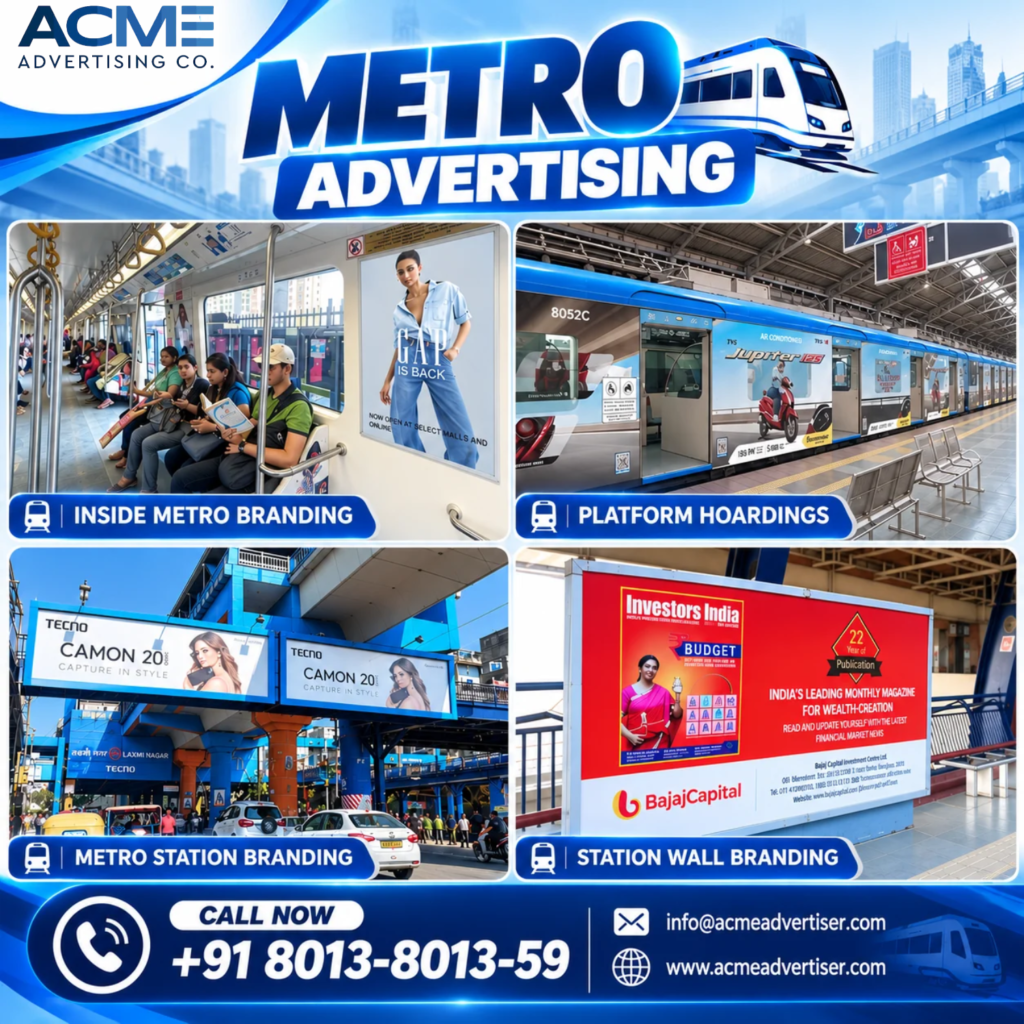
India’s metro networks provide different advertising environments depending on their route structures, passenger movement, and surrounding commercial areas.
Delhi NCR offers extensive metro connectivity across residential, commercial, and institutional locations. Mumbai’s metro network connects important urban areas and complements the city’s wider public transport system. Bengaluru and Hyderabad provide opportunities to reach professionals and commuters travelling through major employment and residential zones.
Chennai, Kolkata, Kochi, Pune, and other cities also offer metro-related advertising opportunities based on operational networks and available media inventory.
Businesses should assess each city’s passenger movement, station locations, route connectivity, and available advertising formats before finalising a campaign.
Metro Advertising for Different Industries
Metro advertising can support marketing activities across several industries. Real estate companies can promote residential projects and commercial developments to people travelling through relevant neighbourhoods. Retail and fashion brands can highlight seasonal collections, store launches, and special offers.
Automobile companies may use train branding or station displays to introduce new models and communicate product features. Educational institutions can promote admissions, courses, and upcoming programmes. FMCG and consumer electronics brands can use repeated commuter exposure to strengthen product familiarity.
The advertising format should match the audience and the message. A product launch may benefit from visually prominent station branding, while a short promotional campaign may use selected digital screens.
Designing an Effective Metro Advertising Campaign
Metro advertisements need to communicate their message quickly. Passengers may be walking through a station, waiting for a train, or travelling inside a moving coach. Therefore, the creative design should be simple, visually clear, and easy to recognise.
A strong headline, readable typography, relevant product imagery, and prominent brand identity can improve communication. Advertisements placed at a distance should use larger visual elements, while displays viewed at close range can accommodate additional product information.
Brands should also maintain consistency across different advertising surfaces. Using coordinated colours, graphics, and messaging helps passengers recognise the campaign at multiple points during their journey.
Factors Affecting Metro Advertising Costs in India
Metro advertising costs depend on the city, station, route, advertising format, display dimensions, campaign duration, and availability of media inventory. Premium stations with significant passenger movement may have different pricing from smaller or less busy locations.
Train branding, station domination, digital screens, and individual poster placements also involve different production and installation requirements. Additional expenses may include artwork adaptation, printing, fabrication, permissions, and maintenance, depending on the selected format.
Businesses should review quotations carefully to understand the exact locations, advertising surfaces, campaign dates, production inclusions, and any additional charges.
Permissions and Operational Requirements
Metro advertising is subject to the policies and approval procedures of the relevant metro authority or authorised advertising concessionaire. Advertisers must follow the applicable guidelines for creative content, dimensions, materials, installation methods, and display duration.
Certain formats may have specific technical and safety requirements, particularly when advertisements are installed inside trains or near passenger movement areas. Artwork approval and installation schedules should be confirmed before production begins.
Following the relevant procedures helps ensure that advertisements are displayed appropriately without interfering with passenger movement or metro operations.
Integrating Metro Advertising with Digital Marketing
Metro advertising can complement digital marketing campaigns by connecting physical brand visibility with online customer interactions. A campaign displayed at metro stations can use consistent creative elements across social media, search advertising, and digital promotions.
QR codes, where permitted and suitable for the placement, can direct interested passengers towards product information or campaign landing pages. Brand-specific promotional messages can also support online searches and improve recognition across multiple marketing channels.
This integrated approach allows businesses to maintain a consistent message while reaching audiences through different stages of their customer journey.
Planning a Metro Advertising Campaign
A successful metro advertising campaign starts with a clear understanding of the target audience and marketing objective. Businesses should identify the cities, routes, stations, and advertising formats that best match their requirements.
After selecting suitable inventory, the next steps include creative development, artwork approval, production, installation, and campaign monitoring. For campaigns covering multiple cities, maintaining consistent brand guidelines while adapting placements to local audiences can improve coordination.
Metro advertising can become a valuable part of an outdoor media strategy when location selection, creative design, campaign duration, and audience relevance are planned together.
What is the cost of metro advertising in India?
The cost of metro advertising depends on the selected city, station, advertising format, display size, campaign duration and expected audience exposure. Options such as train branding, platform panels, station branding, pillar wraps, entry and exit gates, and digital screens have different pricing structures.
Premium metro stations and high-traffic routes may have higher media costs because of their passenger movement and visibility. The final quotation may also include creative production, printing, installation, dismantling and applicable taxes.
To receive an accurate estimate, share your preferred city, target stations, advertising format and campaign dates. Request a complete cost breakdown so you can compare available options before confirming the booking.
How can I check metro advertising space availability for my campaign dates?
Metro advertising inventory varies by city, station and advertising format. Availability may differ for train wraps, platform displays, concourse panels, digital screens and other promotional spaces, particularly at popular interchange stations.
Before selecting a location, ask the advertising agency for available sites, display specifications, recent photographs and the proposed campaign schedule. This helps you assess whether the selected inventory matches your audience and visibility requirements.
Share your campaign start date, duration and preferred metro stations to receive suitable options. It is advisable to check availability early, especially when planning a launch, seasonal promotion or city-wide advertising campaign.
What is included in a metro advertising package?
A metro advertising package generally covers the selected media space for an agreed campaign period. Depending on the format and service provider, it may include train panels, station branding, platform displays, digital screen slots or other approved advertising placements.
Printing, fabrication, creative adaptation, installation, dismantling and maintenance may be charged separately. Digital advertising packages may have additional conditions relating to screen duration, playback frequency, content specifications and scheduling.
Before making payment, request a written quotation that clearly identifies the media charges, production costs, installation requirements, taxes and any additional fees. Confirming these details helps prevent unexpected expenses during campaign execution.
How early should I book metro advertising before launching a campaign?
It is advisable to begin the booking process several weeks before the intended launch date. Popular metro stations and premium advertising locations may have limited inventory, while creative approvals, production and installation can require additional time.
The overall schedule depends on the city, advertising format, number of stations and campaign scale. Train branding and large-scale station campaigns may require more coordination than standard panel or digital screen placements.
For a smoother launch, finalise the locations, campaign duration and artwork well in advance. Also confirm the installation schedule and request photographs or other execution updates once the advertising displays are live.
What approvals and installation checks are required for metro advertising?
Metro advertising must follow the applicable advertising policies and approval procedures of the concerned metro authority or authorised media concessionaire. Requirements can differ between cities and formats, particularly for train wraps, station branding, digital displays and large promotional installations.
The advertising provider should clarify the artwork specifications, content restrictions, installation permissions and technical requirements before production begins. Avoid printing or fabricating campaign materials until the creative has received the necessary approval.
Before the campaign goes live, confirm the approved display locations, installation quality and campaign start date. Request clear photographs or video proof of the installed advertisements and establish how maintenance or replacement issues will be handled during the booking period.
Frequently Asked Questions (FAQs):
1. How can I book unipole advertising locations in the UAE for my brand?
To book unipole advertising in the UAE, share your target emirate, preferred roads or business districts, campaign dates, and target audience with an outdoor advertising provider. Request available site options and location photographs before confirming your booking.
2. Which UAE locations are suitable for unipole advertising campaigns?
Dubai, Abu Dhabi, Sharjah, and other UAE emirates offer potential advertising locations along major roads, commercial corridors, and high-traffic areas. The best site depends on your target audience, campaign objectives, visibility requirements, and available advertising inventory.
3. Can I select specific unipole sites in Dubai or Abu Dhabi?
Yes, you can request preferred locations based on your target market, nearby landmarks, business areas, and traffic routes. Ask the provider to confirm site availability, display dimensions, photographs, and campaign dates before finalizing the locations.
4. What details are included in a UAE unipole advertising quotation?
A quotation may cover media rental, display specifications, printing, installation, campaign duration, and applicable permissions or service charges. Request an itemized breakdown so you can compare site options and understand any additional costs.
5. Can I book multiple unipole advertising sites across different UAE emirates?
Yes, you can request a multi-location campaign covering Dubai, Abu Dhabi, Sharjah, and other emirates, subject to site availability. Provide your preferred locations, campaign period, and number of sites to receive suitable options for your media plan.
6. What is the minimum booking duration for unipole advertising in the UAE?
The minimum booking period varies by advertising site, media owner, and campaign agreement. Confirm the available booking durations, start dates, extension options, and any restrictions before committing to a campaign.
7. Can I customize unipole advertisements with my brand’s campaign artwork?
Yes, unipole advertisements can feature your brand logo, product imagery, campaign message, and promotional offer. Confirm the site’s artwork specifications, permitted dimensions, printing requirements, and approval process before sending the final creative.
8. How can I confirm my unipole advertising campaign in the UAE?
Request written confirmation of the selected sites, booking dates, campaign duration, total charges, and installation arrangements. Before launch, clarify who handles applicable advertising permissions and ask for installation photographs or other proof that your advertisement has been displayed.
Website: www.acmeadvertiser.com
LinkedIn: Acme Advertising Co