
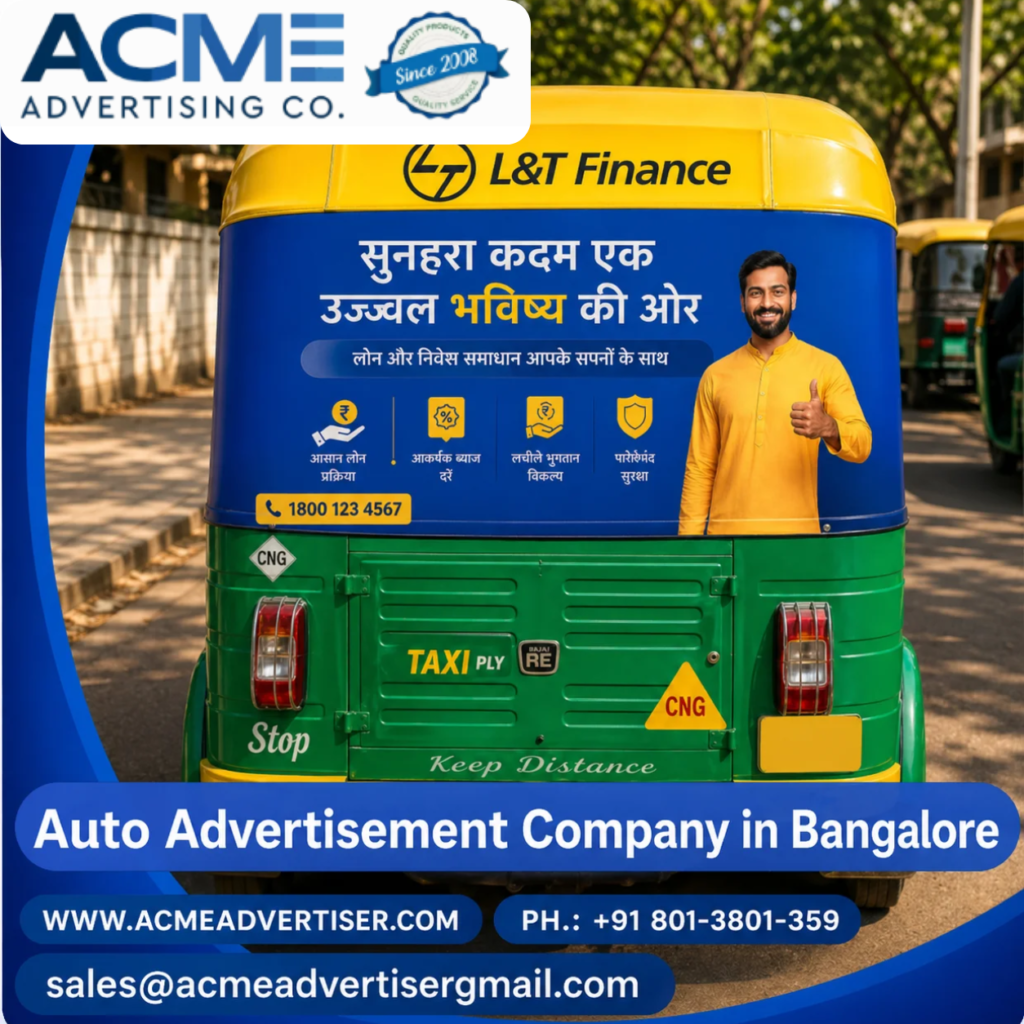
In today’s competitive market, brands need advertising solutions that are affordable, mobile, and capable of reaching people in their daily lives. Auto Advertising has emerged as one of the most effective forms of outdoor advertising, helping businesses connect with local audiences while maximizing visibility across high-traffic areas.
Unlike traditional billboards that remain fixed in one location, auto advertisements travel throughout the city, continuously exposing brands to thousands of potential customers every day. Whether you are promoting a retail store, real estate project, educational institution, healthcare service, or local business, auto advertising offers unmatched street-level engagement.
Why Smart Brands Are Turning to Auto Advertising
Modern consumers spend a significant amount of time commuting, shopping, and moving through busy city streets. Auto-rickshaws naturally travel through these crowded routes, making them powerful advertising vehicles.
Some key advantages include:
High daily visibility
Cost-effective advertising solution
Hyperlocal audience targeting
Increased brand recall
Wide geographic coverage
Continuous exposure throughout the day
Suitable for businesses of all sizes
How Auto Advertising Creates Continuous Brand Exposure
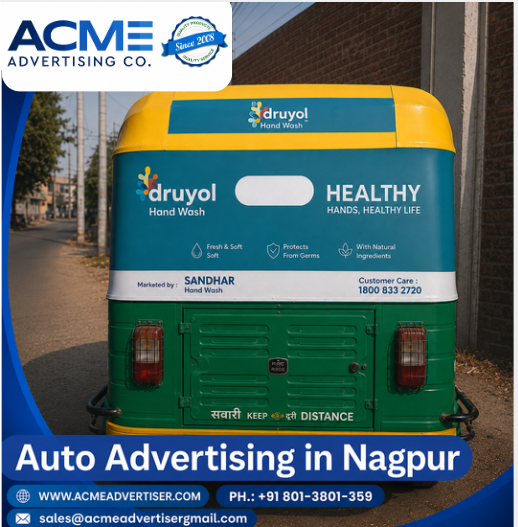
One of the biggest strengths of auto advertising is its mobility. Every auto-rickshaw becomes a moving billboard that carries your brand message to multiple locations throughout the day.
An auto advertisement may be seen by:
Office commuters
Students
Shoppers
Tourists
Local residents
Business professionals
Daily travelers
Where Auto Advertising Works Best: Auto advertising performs exceptionally well in locations where pedestrian and vehicle traffic remain consistently high.
Commercial Markets: Busy markets attract thousands of visitors daily, making them ideal for brand visibility.
Examples include:
Wholesale markets
Shopping streets
Retail hubs
Local bazaars
Electronics markets
Business Districts: Corporate areas provide excellent exposure to working professionals and decision-makers.
Common locations include:
IT parks
Office complexes
Financial districts
Co-working spaces
Educational Zones: Areas surrounding schools, colleges, and universities generate continuous footfall from students, faculty members, and parents.
Transportation Hubs: Transit locations create opportunities for repeated brand impressions.

Examples include:
Metro stations
Railway stations
Bus terminals
Taxi stands
Airport approach roads
Which Areas Generate the Highest Auto-Rickshaw Movement?
The effectiveness of auto advertising increases significantly in locations where auto-rickshaws operate throughout the day.
High-Demand Urban Areas
Auto-rickshaws are commonly found in:
City Centers: Dense commercial zones experience heavy passenger movement from morning until late evening.
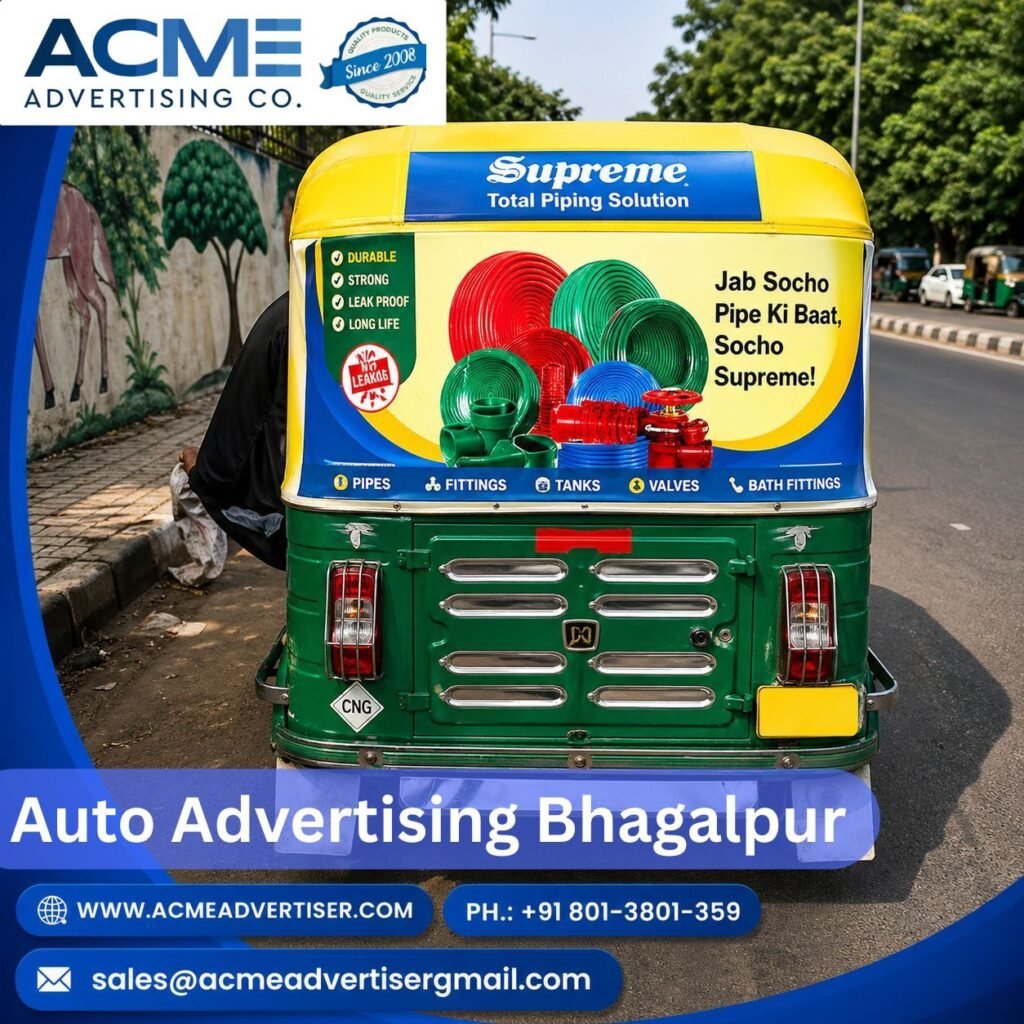
Shopping Destinations: Popular shopping districts attract consistent customer traffic, increasing advertisement visibility.
Residential Communities: Autos frequently operate between residential colonies and nearby commercial areas, ensuring repeated local exposure.
Metro Connectivity Routes: Routes connecting metro stations with nearby neighborhoods often witness high auto-rickshaw usage.
Tourist and Entertainment Zones: Areas near attractions, restaurants, cinemas, and entertainment venues offer excellent opportunities for brand awareness campaigns.
Industries That Benefit Most from Auto Advertising
Auto advertising can be customized for virtually any industry.
Real Estate: Builders and developers use auto advertising to generate local project awareness and site visit inquiries.
Retail Businesses: Retail stores can promote offers, discounts, and new product launches to nearby customers.
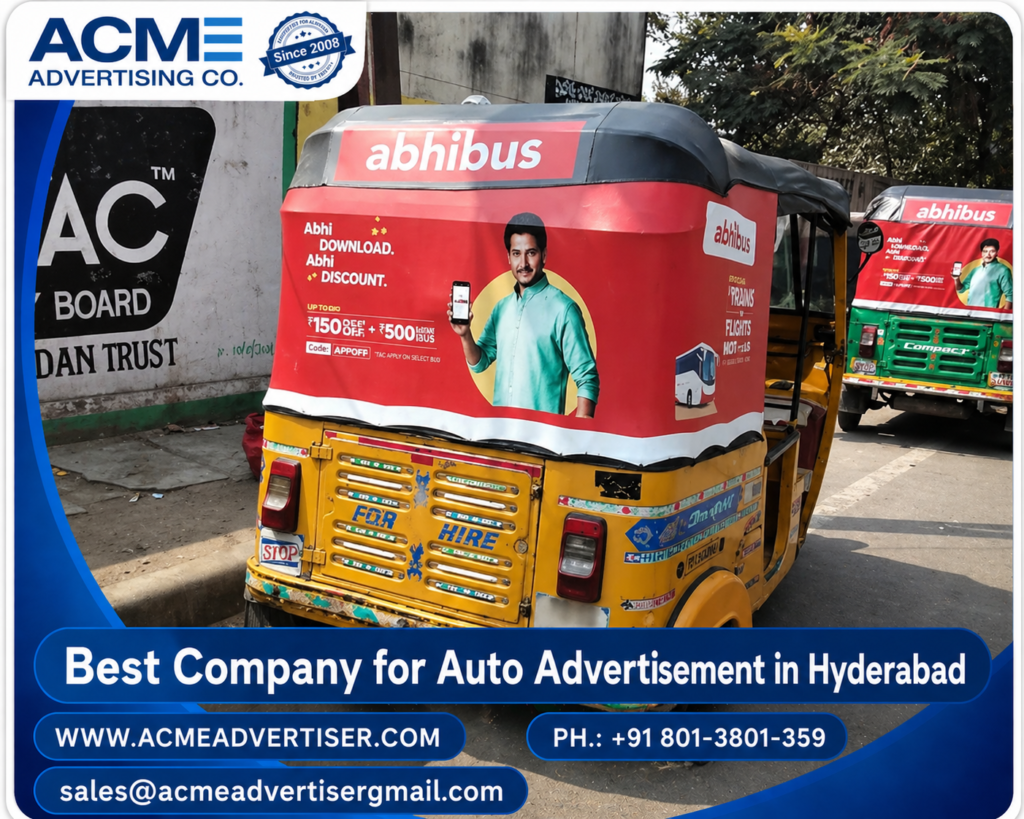
Healthcare Services: Hospitals, clinics, diagnostic centers, and pharmacies use auto advertising to increase local visibility.
Educational Institutions: Schools, coaching centers, colleges, and training institutes can attract admissions through targeted citywide exposure.
Restaurants and Food Chains: Food brands benefit from repeated visibility among local residents and commuters.
E-Commerce and Delivery Brands: Auto advertising helps strengthen brand recognition across multiple neighborhoods simultaneously.
Why Auto Advertising Delivers Strong ROI
Return on Investment (ROI) is one of the primary reasons businesses choose auto advertising.
Unlike many advertising channels that require substantial budgets, auto advertising offers:
Lower campaign costs
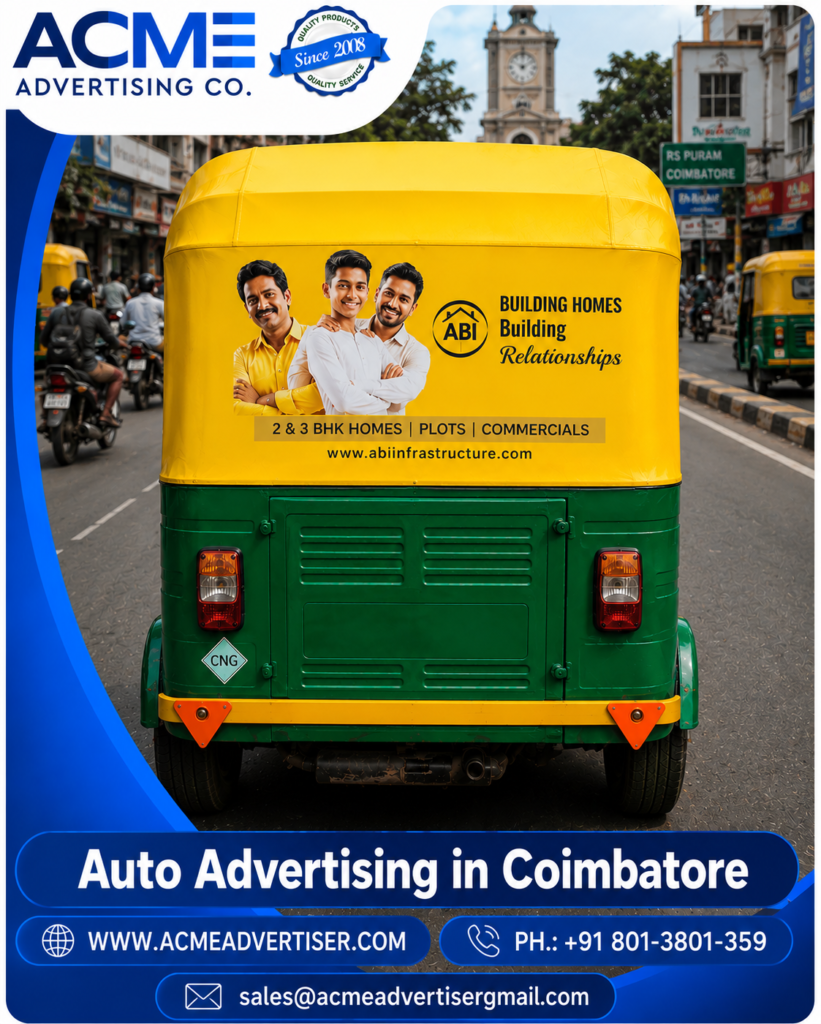
Long campaign duration
High impression frequency
Localized targeting
Better cost-per-view
Enhanced brand recall
Custom Branding Options Available: Businesses can choose from various branding formats depending on campaign objectives.
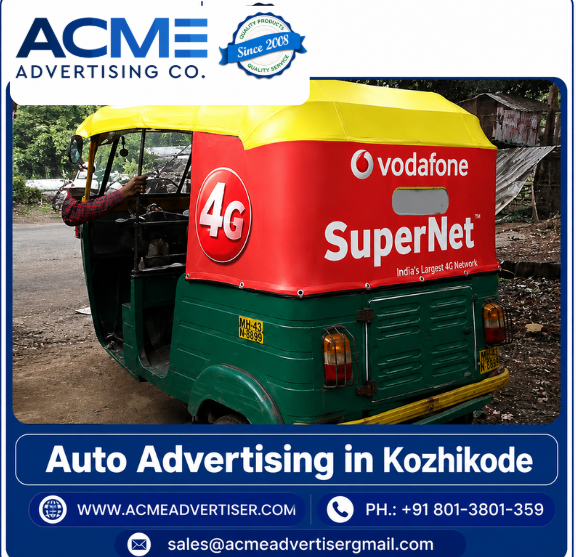
Back Panel Branding: Ideal for visibility in traffic and at intersections.
Side Panel Advertising: Provides maximum exposure to pedestrians and nearby vehicles.
Full Auto Wraps: Transforms the entire auto-rickshaw into a moving brand ambassador.
Fleet Campaigns: Multiple branded autos operating simultaneously can create significant citywide impact.
How ACME Advertising Co. Helps Brands Grow
At ACME Advertising Co. we design and execute result-oriented auto advertising campaigns that help brands achieve maximum visibility and audience engagement.
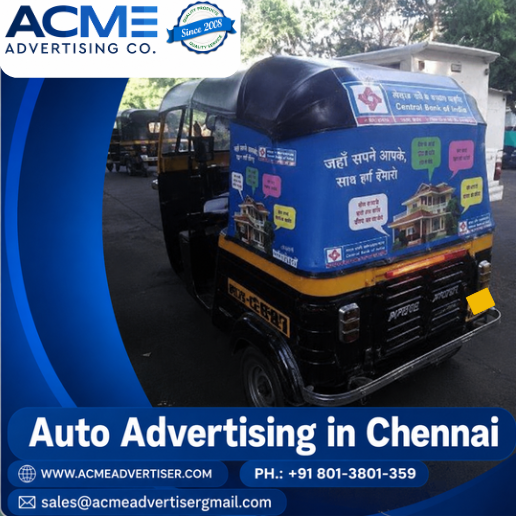
Our solutions include:
Strategic route planning
High-quality printing
Professional installation
Campaign monitoring
Citywide coverage options
Customized branding formats
FAQs
1. How does Auto Advertising deliver a strong ROI compared to other outdoor advertising formats?
It offers strong ROI because it combines mobility with continuous visibility. Instead of being limited to a single location, branded autos travel through multiple high-traffic areas every day, allowing businesses to reach a larger audience at a relatively lower cost.
2. What factors influence the ROI of an Auto Advertising campaign?
Several factors affect ROI, including campaign duration, number of branded autos, route selection, target audience, design quality, and the frequency of exposure. Campaigns operating in busy commercial and residential areas typically generate better results.
3. Is Auto Advertising suitable for local businesses looking for measurable returns?
Yes. It is particularly effective for local businesses because it targets audiences within specific geographic areas. This localized exposure can increase footfall, inquiries, and brand recognition while keeping advertising costs manageable.
4. How can businesses measure the ROI of Auto Advertising?
Businesses can track ROI through lead generation, customer inquiries, promotional code usage, website traffic, QR code scans, call tracking, and sales growth during the campaign period. These metrics help evaluate campaign effectiveness.
5. Does long-term Auto Advertising provide better returns than short-term campaigns?
In most cases, yes. Longer campaigns create repeated brand exposure, which improves brand recall and consumer trust. Consistent visibility over several weeks or months often results in stronger ROI than short-term advertising efforts.
6. Which industries typically achieve the highest ROI from Auto Advertising?
Industries such as real estate, education, healthcare, retail, restaurants, e-commerce, and local service businesses often see excellent ROI because they benefit from frequent exposure to local consumers.
7. How does route selection impact the ROI of Auto Advertising?
Routes play a crucial role in campaign performance. Autos operating near markets, metro stations, shopping centers, business districts, schools, and residential communities generally generate more impressions and better audience engagement.
8. Can Auto Advertising improve brand recall and contribute to long-term ROI?
Absolutely. Repeated exposure across different locations helps consumers remember a brand. Higher brand recall can influence future purchasing decisions, creating long-term value beyond the immediate campaign period.
Website: www.acmeadvertiser.com
LinkedIn: Acme Advertising Co