

Table of Contents
Nike, Inc. was founded as Blue Ribbon Sports (BRS) in January 1964 by University of Oregon track athlete Phil Knight and his coach, Bill Bowerman. They started by importing high-quality, low-cost running shoes from Japan’s Onitsuka Tiger and selling them at track meets in the US. The company officially became Nike, Inc. in 1978, named after Nike, the Greek goddess of victory, and adopted the now-iconic “Swoosh” logo designed by Carolyn Davidson.
Nike’s global marketing strategy centered on a strong brand identity of athleticism and performance, using celebrity athlete endorsements (like Michael Jordan) and the famous 1988 “Just Do It” campaign to inspire emotional connections with consumers.
Entry into the Indian Market:
In Nike Case Study: Nike entered the Indian market in 1996 through a licensing agreement with Sierra Industrial Enterprises Private Limited (later SSIPL Retail Limited). This was a low-risk strategy for Nike to test the market which was, at the time, dominated by competitors like Reebok and Adidas, who had localized their marketing from the start. In 2004, the licensing agreement ended, and Nike India became a fully owned subsidiary of the global Inc., allowing for more control over its operations and marketing.
Marketing Strategies in India:
Nike’s approach to marketing in India can be divided into two distinct phases:
1. Initial Phase (1996 – c. 2005): Embracing International Endorsements
Initially, Nike Case Study: Nike India’s marketing relied on airing global advertisements featuring international sports stars like Michael Jordan and Tiger Woods. This strategy was largely ineffective as these sports were less popular in India, where cricket was, and is, the dominant sport. The international-focused campaigns failed to resonate emotionally with the average Indian consumer who primarily followed cricket and sought local relevance.
2. Localized Approach (c. 2005 – Present): Customizing for the Indian Market
Recognizing the cultural importance of cricket, Nike shifted its strategy to connect with Indian consumers.
- BCCI Sponsorship: In 2005, Nike secured the rights to become the official kit sponsor for the Indian cricket team for five years, a deal that significantly boosted brand visibility and sales of replica merchandise.
- Localized Endorsements: The brand signed high-profile local cricket and football stars, such as Bhaichung Bhutia, as ambassadors.
- India-Specific Products: Nike launched cricket-specific products, including the “Air Zoom Yorker” and “Air Zoom Opener” cricket shoes, designed for Indian playing conditions.
- Grassroots Engagement: Nike invested in local sports academies, like the BCCI’s National Cricket Academy and Mahesh Bhupathi’s tennis academy, to foster brand loyalty among young athletes from an early age.
- Culturally Relevant Campaigns: Later campaigns, like the viral “Da Da Ding” ad, used culturally resonant themes and music to celebrate local female athletes and the general spirit of sport, effectively using emotional storytelling to connect with the youth.
By adapting its global brand identity to include local sports and cultural narratives, Nike managed to gain significant market share and build a stronger emotional connection with the Indian audience.
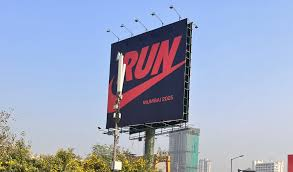
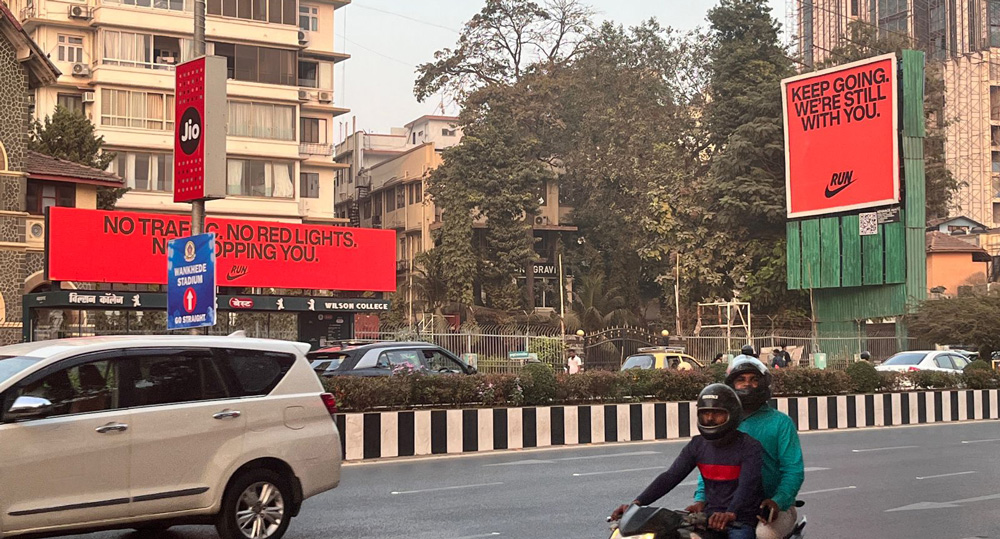
Nike’s OOH (Out-Of-Home) advertising leverages high-impact, contextual, and innovative placements, using interactive digital screens, 3D anamorphic illusions, and marathon route billboards with motivational taglines to create viral moments, enhance brand recall, and connect deeply with athletes’ mindsets during events. They focus on cultural relevance, technology integration, and purpose-driven storytelling, turning static billboards into immersive brand experiences that drive social sharing and community engagement.
Key OOH Strategies
- Interactive & Digital OOH: Using digital billboards that react to live events or allow participation, turning passive viewing into active engagement.
- 3D Anamorphic Illusions: Creating hyper-realistic 3D effects (e.g., a giant shoe coming off the screen in Shinjuku) for viral, shareable content.
- Contextual & Hyper-Relevant Messaging: Placing motivational slogans directly on marathon routes (Chicago, Mumbai) to speak to runners’ immediate needs and struggles.
- Cultural Moments: Launching campaigns like “Winning Isn’t for Everyone” during the Olympics with multi-city OOH to spark global conversations.
- Purpose-Driven Storytelling: Using locations and copy (e.g., “After Dark Tour” for women) to inspire confidence and movement in specific communities.
Examples
- Tokyo 3D Billboard (2022): A curved screen made a giant sneaker appear to float and stretch into the street, going viral globally.
- Marathon Route Billboards: Slogans like “SHUT UP, BRAIN” on Chicago Marathon billboards provided mental boosts during the race.
- “Why Do It?” Campaign: Reframing “Just Do It” with OOH to resonate with young athletes facing modern pressures
Core Takeaway
Nike’s OOH success comes from treating the medium as an immersive experience, not just an ad space, by integrating technology, local context, and emotional storytelling to foster a strong connection with athletes.
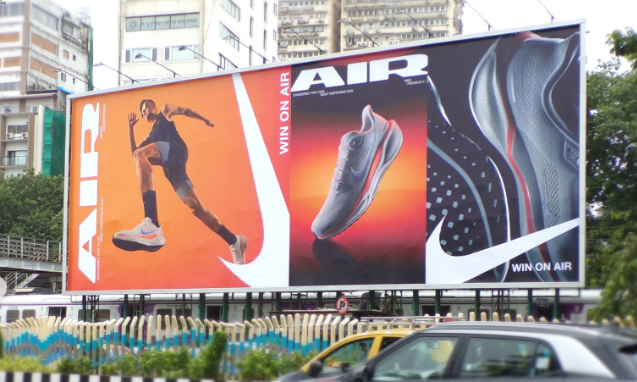
Nike’s brand advertising leverages a powerful mix of emotional storytelling (like “Just Do It”), high-profile athlete endorsements, and extensive digital/social media, including their own apps and websites, to create a strong connection with consumers, positioning themselves at the intersection of sports, culture, and innovation, driving demand both online and in their physical retail stores. Their strategy focuses on authenticity, community, and empowering athletes, utilizing premium digital ad units and varied content to maintain brand relevance across platforms, from apps to major media properties.
Nike Case Study: Key Pillars of Nike’s Advertising & Retail Media:
- Storytelling & Brand Purpose: Campaigns like “Why Do It?” aim to inspire and connect with younger audiences by reframing greatness as a personal choice, integrating deeply with their core “Just Do It” message.
- Athlete Endorsements (Influencer Marketing): Collaborations with stars (Jordan, Ronaldo, Serena Williams) tell authentic brand stories, extending beyond commercials to lifestyle and cultural influence.
- Digital & Social Media Dominance: Nike utilizes apps, online content, and social platforms (in-house management) to foster community and drive direct-to-consumer (DTC) engagement.
- Retail Media Integration: By controlling their digital ecosystem (Nike App, SNKRS app, Nike.com), they create valuable ad space, promoting products directly to engaged shoppers, turning their retail channels into media properties.
- Broad Media Mix: They invest heavily in digital, print, and TV, advertising across numerous media properties and formats, ensuring wide reach for product launches and brand messages.
How it Works Together:
Nike creates desire through emotional campaigns and influencer stories, then uses its own digital retail platforms (retail media) to capture that interest and convert it to sales, offering a seamless brand experience from inspiration to purchase. Their vast advertising spend supports this ecosystem, constantly refreshing content and products to stay culturally relevant.
Here’s a ~200-word, humanized, growth-focused article with a Nike India–style inspiration (no claims, no comparisons, no negative branding):
How Acme Advertising Co. Helps Your Brand Grow Through OOH & Retail Branding
Brands like Nike in India have shown that growth doesn’t come from visibility alone—it comes from being present where people move, shop, and decide. This is exactly how Acme Advertising Co. helps brands scale through powerful OOH and retail branding.
Through strategically placed outdoor media, Acme ensures your brand appears on high-impact roads, premium junctions, and key urban touchpoints, turning everyday commutes into brand impressions. This consistent visibility builds trust, familiarity, and authority—long before a customer enters a store or searches online.
At the retail level, Acme strengthens decision-making moments using POSM and retail media such as standees, in-store displays, dealer boards, and branded environments. These elements guide attention, reinforce messaging, and influence final purchase actions.
Just like Nike’s India presence connects outdoor storytelling with in-store experience, Acme creates a seamless journey from street to shelf. The result is stronger recall, higher footfall, and better conversion support.
If you want your brand to grow through smart placement, strong visibility, and retail-level impact, Acme Advertising Co. helps you move from awareness to action—everywhere your audience already is. 🚀
Let Acme Advertising Co. help your brand shine across cities, roads, and high-traffic locations.
📍 Our Services:
OOH Media | Transit Media | Retail Media | Electronic Media | POSM
📞 +91 8013-8013-59
🌐 www.acmeadvertiser.com 📧 sales@acmeadvertiser.com
🔗 LinkedIn :Acme Advertising Co. I Follow Us on Instagram
Your brand deserves visibility that moves people—let’s make it happen.