

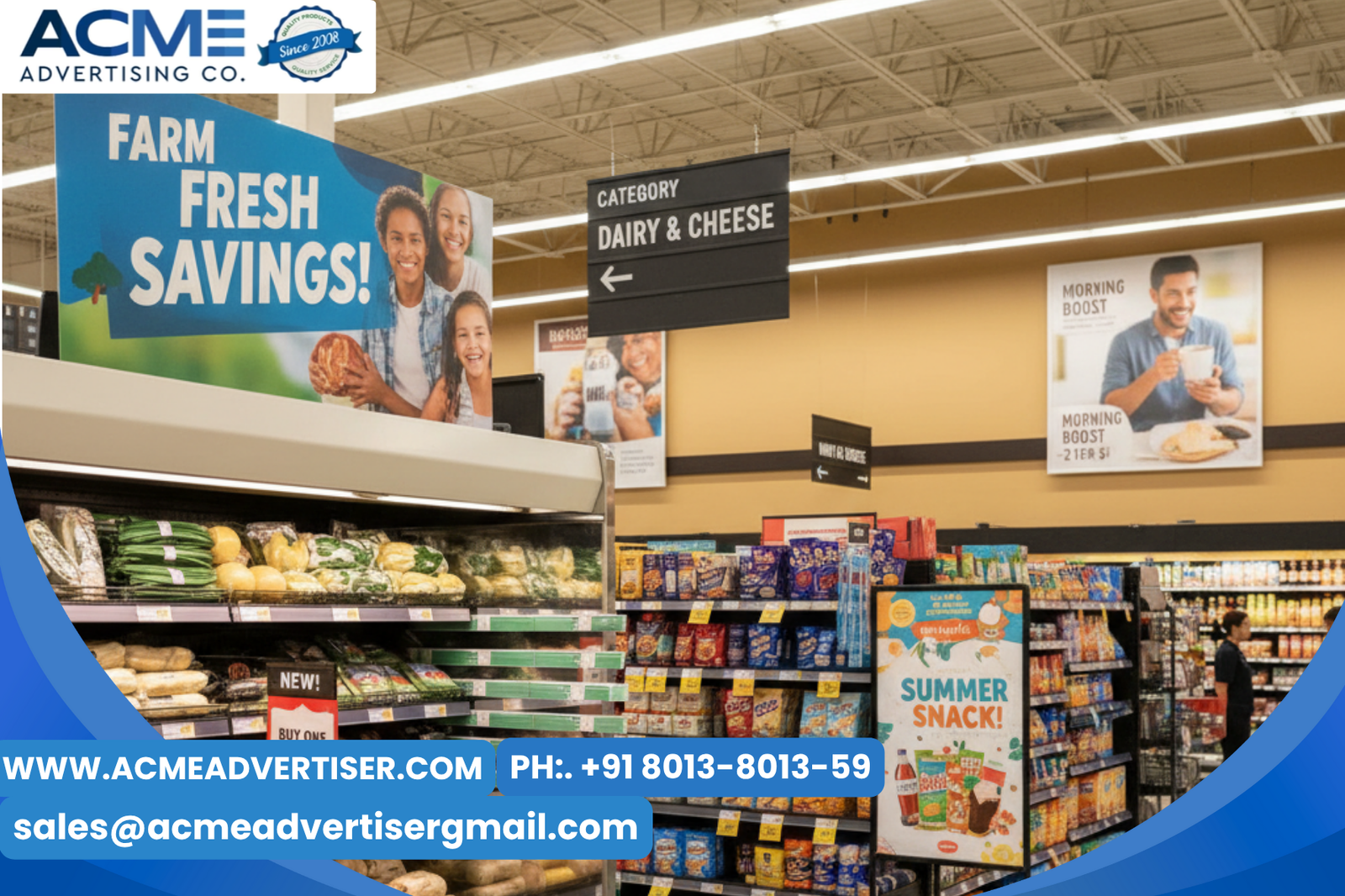
🌐www.acmeadvertiser.com 📞+91 8013 8013 59 📧sales@acmeadvertiser.com 👉🏻Connect with us on LinkedIn
The Strategic Rise of Non-Lit Boards in U.S. Retail Media: Unlocking Next-Gen In-Store Engagement: In the modern retail landscape—where consumers ricochet between digital and physical touchpoints faster than a marketer can say “omnichannel”—brands are aggressively recalibrating how they deploy media inside stores. Among the most rapidly emerging formats in this era of hybrid shopper journeys is the non-lit retail media board. These static, visually anchored placements are experiencing a renaissance across the United States, driving both operational efficiency and revenue lift for retailers while offering advertisers a high-impact, context-rich canvas.
For an industry captivated by screens, sensors, pixels, and programmatic wizardry, the non-lit board might seem like yesterday’s hero. But spoiler alert: it’s quietly becoming one of the most strategically valuable tools in the retail media stack—precisely because it delivers something today’s digital ecosystem struggles to replicate: predictable visibility, zero latency, and frictionless shopper attention.
Yes, we’ve come full circle. Static is the new dynamic.
Below is the full landscape analysis.

1. Defining Non-Lit Boards in the Retail Media Ecosystem
In the U.S. retail media environment, non-lit boards are printed, static in-store displays that rely on ambient store lighting rather than backlit illumination. These include:
- Header cards
- Endcap signage
- Shelf blades and aisle violators
- Category navigational boards
- In-store promotional posters
Although they lack the digital flash of screens, they deliver something just as valuable: cost efficiency and operational simplicity. They also serve as a high-visibility medium in areas where digital screens are impractical or where retailers seek a unified store aesthetic.
2. Why Non-Lit Boards Are Rising in Strategic Value
Non-lit boards have surged back onto the strategic roadmap for three primary reasons:
A. Cost-Effective Scale
When inventory expansion and ROI are under board-level scrutiny, non-lit boards allow retailers to deploy media at scale without the CAPEX drag of installing digital hardware.
B. High Proximity to Purchase
Placed inches from products, non-lit boards operate at the hottest moment of the consumer journey—where wallets begin to loosen and decision inertia melts away.
C. Zero Tech Overhead
No software updates. No system downtime. No screen calibration. Just pure, frictionless visibility.
In short: non-lit boards deliver stable performance without requiring a SWAT team of IT specialists.
3. Rise of Non-Lit Boards in U.S.: Unlocking Next-Gen In-Store Engagement: Market Dynamics: A U.S. Snapshot
Below is a condensed view of current adoption patterns across the U.S. retail market.
Table 1: U.S. Retail Adoption Landscape for Non-Lit Boards (2025)
| Retail Segment | Adoption Level | Strategic Use Cases |
|---|---|---|
| Grocery Chains | Very High | Aisle navigation, promo callouts, brand blocking |
| Mass Merchandisers | High | Category headers, event-driven campaigns |
| Drugstores | Moderate | OTC promotions, loyalty messaging |
| Convenience Stores | Moderate | Beverage bays, snack aisles |
| Specialty Retail | Variable | Seasonal displays, curated collections |
4. Shopper Behavior Insights: Static Isn’t Passive—It’s Powerful
Contrary to common assumptions, static media doesn’t equate to passive engagement. In fact, U.S. shopper studies reveal that:
- 71% notice non-lit signage at the shelf
- 54% consider signage influential in last-minute product decisions
- 37% credit non-lit boards with introducing them to a new product
When executed well—meaning relevant placement, category-aligned design, and clutter-free messaging—static boards act like a GPS for shopper intent.
Chart 1: Influence of In-Store Media on U.S. Shopper Decisions
Influence Level (%)
70 ┤           ██████████████████
60 ┤           ███████████████
50 ┤     ███████████
40 ┤     ███████
30 ┤ ██████
20 ┤ ███
10 ┤ █
     Awareness   Influence   Conversion
(Awareness = 68%, Influence = 54%, Conversion = 32%)
5. Retailer POV: The Operational Advantages
For retailers trying to scale retail media networks without overstressing operations, non-lit boards offer some welcomed efficiencies:
A. Lower Deployment Complexity
Shipping and installing static boards requires significantly less specialized labor.
B. Predictable Inventory
Unlike digital networks with hourly impression swings, non-lit placements offer steady exposure.
C. “Continuous On” Messaging
Static boards don’t flicker, fail, reboot, or crash mid-campaign—an underappreciated perk.
D. Harmonized Store Design
Retailers can maintain consistency across locations while still accommodating brand campaigns.
Consider this a win-win: high-margin media revenue with minimal operational turbulence. A CFO’s dream.

6. Brand POV: Why Advertisers Are Leaning In
Advertisers are increasingly integrating non-lit boards as part of their full-funnel retail media mix for specific reasons:
1. Proximity Equals Persuasion
Static signage often sits in the “decision zone”—the real estate where brand preference becomes brand purchase.
2. Strong Incrementality
Retailers are reporting uplift on items spotlighted with non-lit boards, especially in:
- Seasonal categories
- Beverage and snack verticals
- Personal care
- Household cleaning
3. Budget Flexibility
Since the cost per placement is lower, brands can activate larger footprints without triggering CFO alarm bells.
4. Zero-Latency Messaging
Unlike digital media that can lag due to network traffic or triggers, static boards “just work.”
7. Strategic Use Cases: Where Non-Lit Boards Drive the Most Impact
A. New Product Launches
Non-lit boards help brands generate instant shelf presence in categories where new items struggle to stand out.
B. Seasonal and Event-Based Campaigns
Retailers frequently deploy them for:
- Back-to-school
- Holiday gifting
- Summer grilling
- Wellness moments
C. Category Education
Where categories require shopper guidance (think vitamins, skincare, pet care), static boards help simplify complexity.
D. Private-Label Amplification
Retailers can drive loyalty and margin by promoting their own brands through premium static placements.
8. Sustainability Considerations
While sustainability debates can get lively, many retailers are reducing environmental impact by:
- Using recyclable substrates
- Leveraging water-based inks
- Consolidating production runs
- Reusing fixtures seasonally
This creates a high-visibility media format with a lower environmental footprint than traditional legacy prints.
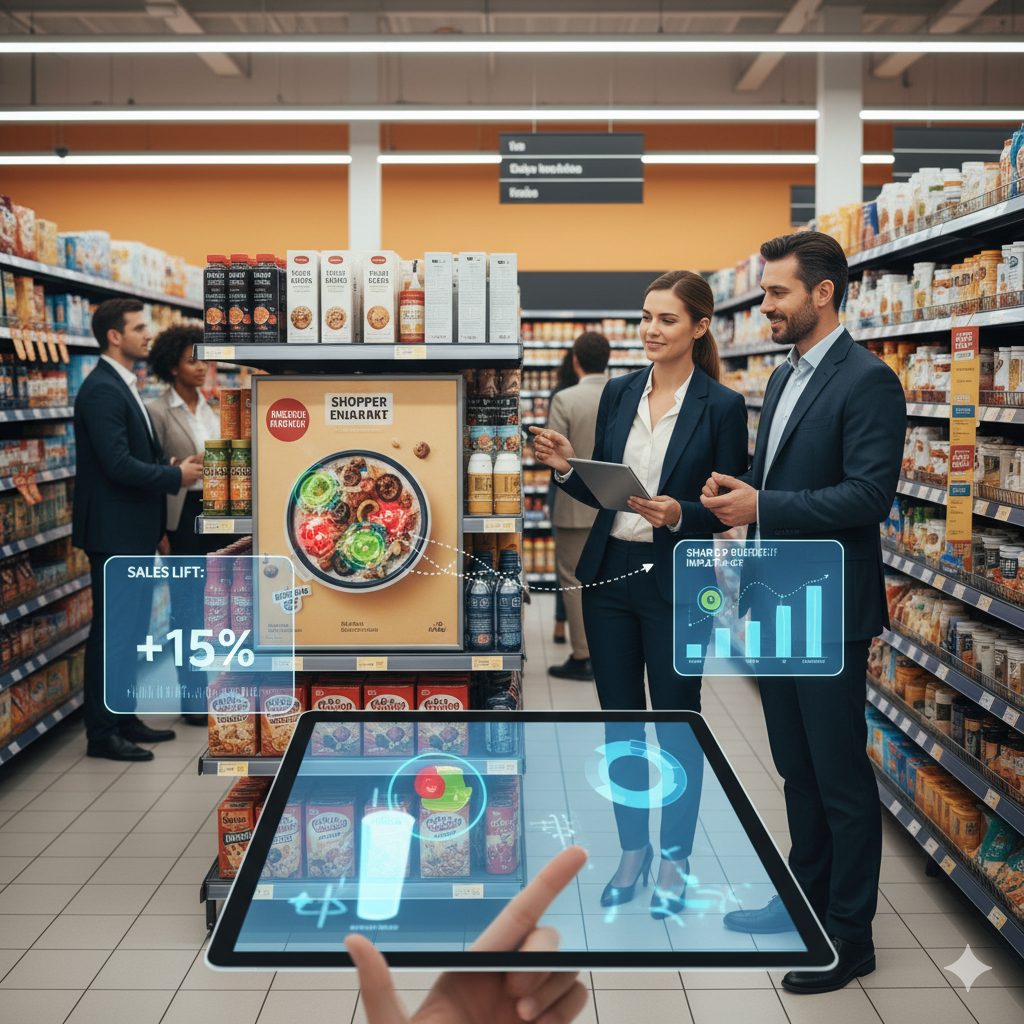
9. Performance Metrics: How Success Is Measured
Retailers and brands typically evaluate outcomes through a blend of:
A. Sales Lift
Direct comparison of promoted vs. baseline sales.
B. Share of Shelf Impact
Measuring category penetration before and after campaign deployment.
C. Shopper Engagement
Eye-tracking and shopper flow insights.
D. Campaign ROI
Static boards tend to show high returns due to low cost and strategic placement.
Table 2: Sample Performance Benchmarks
| Metric Type | Typical Range | Notes |
|---|---|---|
| Incremental Lift | 5% – 22% | Depending on category and placement quality |
| ROI | 2.5x – 6x | Frequently higher than digital screens |
| Noticeability | 60% – 75% | Strongest when placed within 3 ft of product location |
| Conversion Impact | 10% – 30% | Higher in high-traffic categories |
10. Integration With Digital Retail Media: A Holistic Playbook
Retailers are increasingly weaving non-lit boards into broader omnichannel campaigns. Pairings include:
A. Targeted Digital + In-Store Static
Pre-trip digital ads followed by in-store static reminders.
B. QR-Enhanced Static Boards
Static signage becomes a gateway to:
- Recipe pages
- Loyalty offers
- Product education
- Digital coupons
C. Category Reinforcement
Digital ads activate awareness; static placement anchors choice.
Consider this the ultimate “air cover + ground game” combo in consumer marketing.
11. Challenges and Considerations
While non-lit boards deliver strong value, retailers must navigate:
A. Inventory Management
Ensuring consistent placement across stores.
B. Creative Cohesion
Static boards must align with broader brand and category messaging.
C. Avoiding Visual Clutter
Too many signs can create decision fatigue.
D. Production Lead Times
Compared to digital screens, static has longer turnaround cycles.
Still, with proper governance, these challenges are fully manageable.
12. The Road Ahead: U.S. Market Outlook (2025–2028)
The next few years will see accelerated adoption driven by three forces:
1. Expansion of In-Store Retail Media Networks
As U.S. retailers compete for media dollars, non-lit boards will scale quickly as a foundational format.
2. Enhanced Measurement
Computer vision and sophisticated analytics will help quantify impact more accurately—without compromising shopper privacy.
3. Smarter Localization
Store-level variation will enable campaigns to align more tightly with local shopper preferences.
Chart 2: Forecasted Growth of Non-Lit Retail Media Inventory
Year   Estimated % Growth
2025   ████████ 12%
2026   ███████████ 18%
2027   ███████████████ 24%
2028   ███████████████████ 28%
Conclusion: The Non-Lit Board Renaissance
The U.S. retail media landscape is evolving at record speed, and while digital signage steals most of the headlines, non-lit boards are performing the ultimate corporate magic trick—delivering high impact without high drama.
They’re cost-efficient, scalable, durable, and strategically placed at the decisive moment in the shopper journey. For retailers, they generate dependable media revenue. For brands, they boost visibility and conversion. For shoppers, they provide clarity in an aisle overflowing with choice.
In a world obsessed with “what’s next,” non-lit boards remind us that sometimes the most effective innovations aren’t new—they’re simply rediscovered, optimized, and deployed with precision.
Static is back. And it’s making moves.
Let’s take your message straight to the community.
Reach out to ACME Advertising Co. today and unlock high-impact, hyper-local visibility with premium RWA Society Gate Branding solutions.
🌐www.acmeadvertiser.com 📞+91 8013 8013 59 📧sales@acmeadvertiser.com 👉🏻Connect with us on LinkedIn