

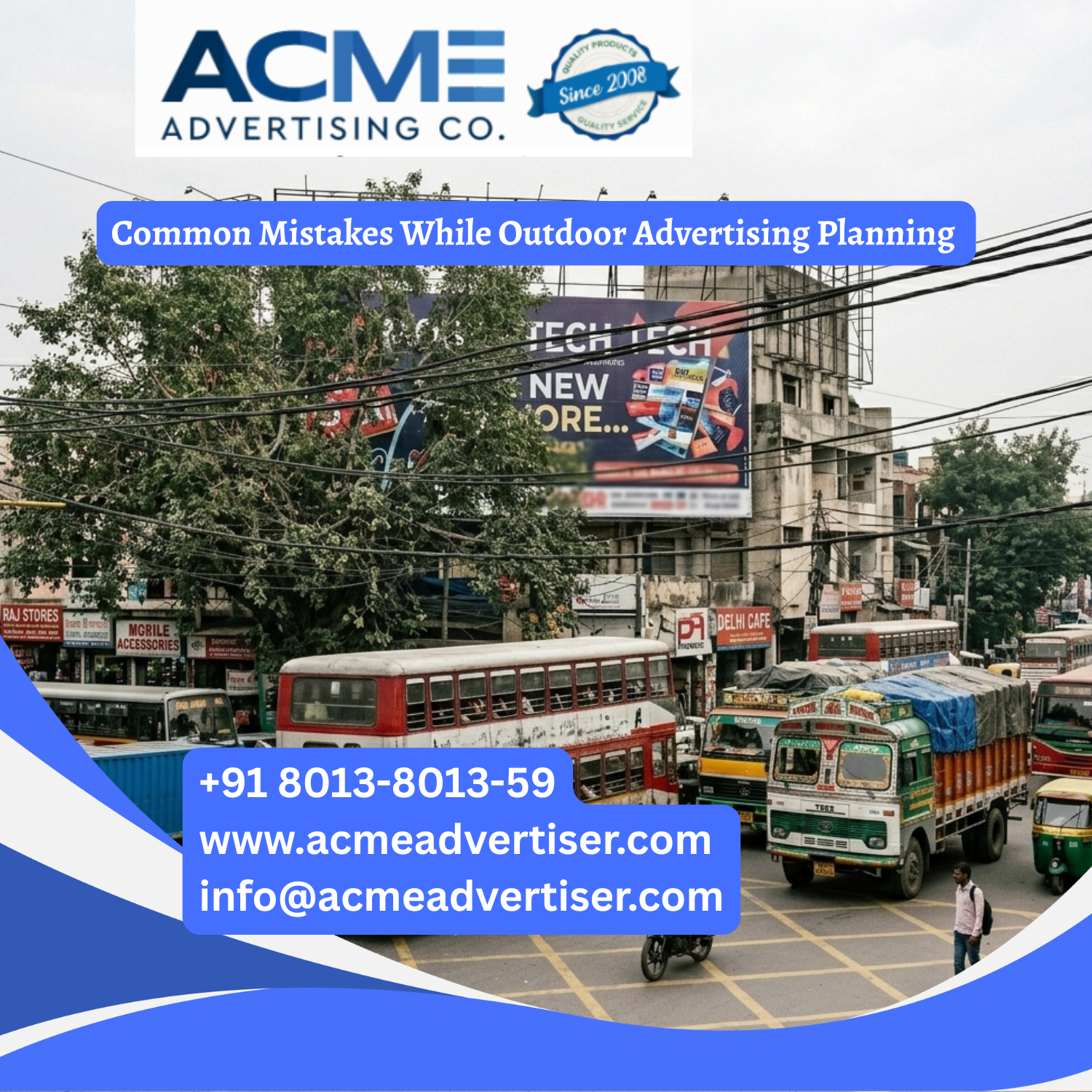
Every day, millions of people travel through city roads, highways, metro stations, business districts, airports, railway stations, residential neighborhoods, and shopping markets. They pass hundreds of outdoor advertisements without even realizing it. Yet, a few campaigns remain in their memory long after they’ve reached home.
Why?
It isn’t because those brands spent the most money. It’s because those campaigns were planned strategically.
Outdoor advertising is one of the few marketing channels that cannot be skipped, blocked, or turned off. Unlike digital ads that disappear with a swipe, outdoor media becomes part of people’s daily journey. However, despite this advantage, many businesses fail to generate leads because they ignore the fundamentals of planning. Avoid Outdoor Advertising Mistakes While Planning.
If you’re investing in billboards, bus branding, metro advertising, hoardings, bus shelters, pole kiosks, digital billboards, airport advertising, or transit media, avoiding these common mistakes can dramatically improve your campaign’s performance.
Why Most Outdoor Advertising Campaigns Underperform
The biggest misconception is that outdoor advertising begins with selecting a billboard.
In reality, the campaign starts much earlier.
Successful brands spend more time understanding:
Who their customers are
Where those customers travel
What message they should communicate
When people are most likely to notice the advertisement
Which outdoor medium matches their marketing objective
Without answering these questions, even the most expensive advertising campaign may fail to produce meaningful results. Avoid Outdoor Advertising Mistakes While Planning.
The Biggest Pain Points Businesses Face in Outdoor Advertising
Before planning any campaign, it’s important to understand the challenges that businesses commonly encounter.
| Pain Point | How It Affects Your Campaign |
|---|---|
| Wrong location selection | Low visibility and poor reach |
| Unclear campaign objectives | Difficult to measure success |
| Poor creative design | People ignore the advertisement |
| Wrong audience targeting | High impressions but low conversions |
| Short campaign duration | Weak brand recall |
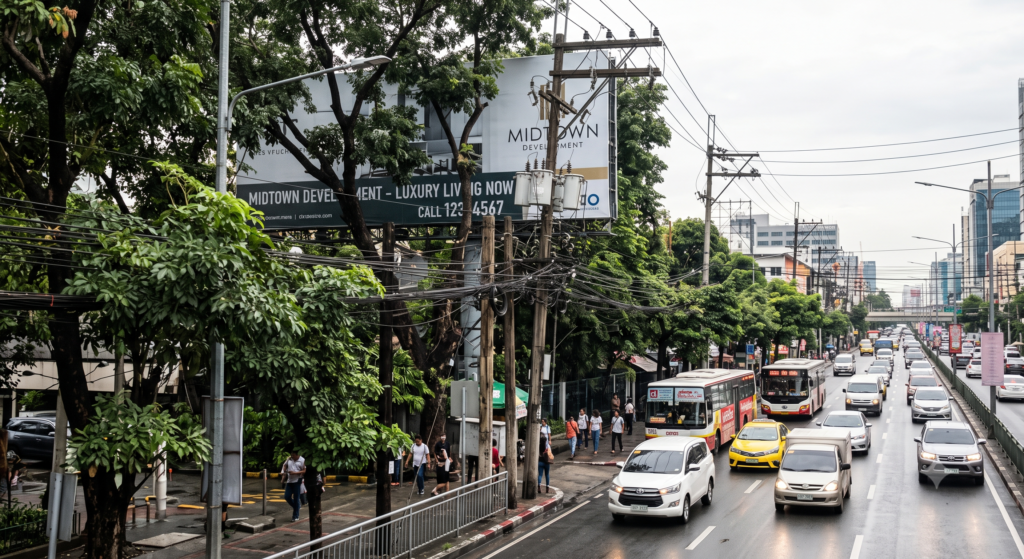
| Lack of visibility analysis | Advertisement gets blocked by trees, poles, or buildings |
| Poor media mix | Budget gets concentrated on one platform |
| No campaign tracking | Impossible to know ROI |
| Seasonal timing mistakes | Advertisement misses buying intent |
| Weak call-to-action | People remember the ad but never respond |
Most failed outdoor campaigns are affected by multiple issues simultaneously rather than just one.
Outdoor Advertising Roadmap: Step-by-Step Planning Process
Instead of randomly booking advertising spaces, follow a structured roadmap.
Step 1 – Define Your Business Objective: Every campaign should begin with a clear purpose.
Ask yourself:
Are you launching a new product?
Building brand awareness?
Driving footfall to a store?
Generating leads?
Promoting an event?
Increasing franchise inquiries?
The objective determines everything that follows.
Step 2 – Understand Your Target Audience: Don’t advertise to everyone.
Study your audience:
Age group
Profession
Income level
Daily travel routes
Peak travel hours
Weekend behavior
Purchasing habits
Outdoor advertising becomes far more effective when it aligns with how people actually move through a city.
Step 3 – Select the Right Outdoor Media: Different advertising formats solve different marketing problems.
| Marketing Goal | Best Outdoor Advertising Option |
|---|---|
| City-wide branding | Bus Advertising |
| Premium awareness | Digital Billboards |
| Local business promotion | Pole Kiosks |
| Residential targeting | Bus Shelters |
| Corporate audience | Metro Advertising |
| Long-distance visibility | Highway Hoardings |
| Product launch | Mobile Van Branding |
| Premium travelers | Airport Advertising |
Choosing the wrong format often leads to wasted budget. Avoid Outdoor Advertising Mistakes While Planning.
Step 4 – Study Traffic Patterns: Many advertisers ignore one important factor:
Not every road carries the same audience.
Questions to ask include:
Is traffic slow or fast?
Are commuters stopping at traffic lights?
Is the road mainly used by office workers?
Are families traveling here?
Is the traffic heavy during weekends or weekdays?
These insights influence both location selection and creative design. Avoid Outdoor Advertising Mistakes While Planning.
Step 5 – Design for Human Attention: Outdoor advertising gives you only a few seconds.
Your advertisement should instantly answer:

Who are you?
What do you offer?
Why should someone care?
What should they do next?
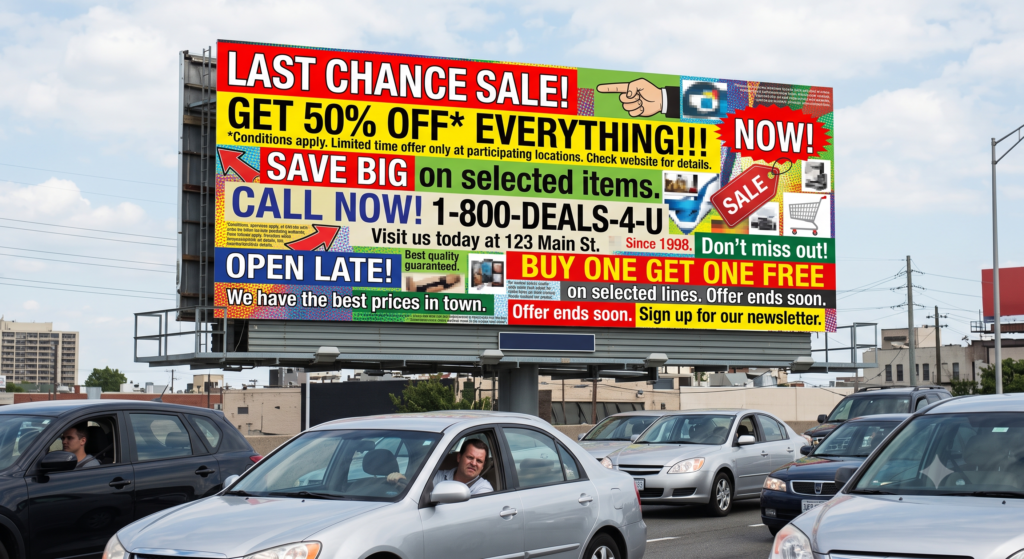
Avoid overcrowded layouts.
Simple creatives consistently outperform complicated ones.
Step 6 – Measure Campaign Success: Outdoor advertising should never be treated as “install and forget.”
Track:
Calls received
QR code scans
Website visits
Google searches
Store footfall
Sales inquiries
Brand recall
Lead quality
Without measurement, future campaigns cannot improve. Avoid Outdoor Advertising Mistakes While Planning.
20 Common Mistakes Businesses Make While Planning Outdoor Advertising
Choosing Locations Only Because They’re Cheap: Budget should never be the only deciding factor.
A premium location often generates significantly higher visibility and better business outcomes than multiple low-traffic sites.
Ignoring Audience Behavior: The best location isn’t always the busiest one.
It’s the one where your customers regularly travel.
Using Small Fonts: If drivers cannot read your advertisement within a few seconds, the campaign loses effectiveness.
Large typography improves readability.
Adding Too Much Information: Outdoor advertising isn’t a brochure.
Keep messaging concise.
Weak Headlines: People remember powerful headlines.
They forget generic marketing slogans.
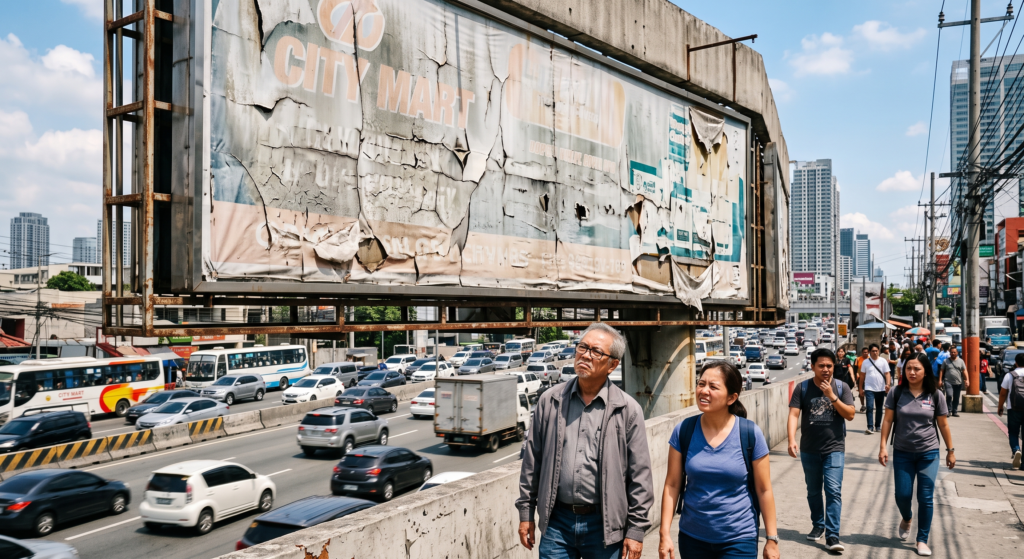
Poor Image Quality: Blurry visuals reduce credibility instantly.
Always use high-resolution creative assets.
Inconsistent Branding: Changing colors, logos, and messaging across different media creates confusion.
Maintain one consistent brand identity.
Ignoring Night Visibility: Many locations receive heavy traffic after sunset.
Proper illumination matters.
Not Visiting the Site: Photos don’t always reveal:
Trees
Construction
Flyovers
Utility poles
Temporary banners
A site visit avoids costly surprises. Avoid Outdoor Advertising Mistakes While Planning.
Running Campaigns for Too Short a Duration: Brand recall builds through repetition.
One week is rarely enough.
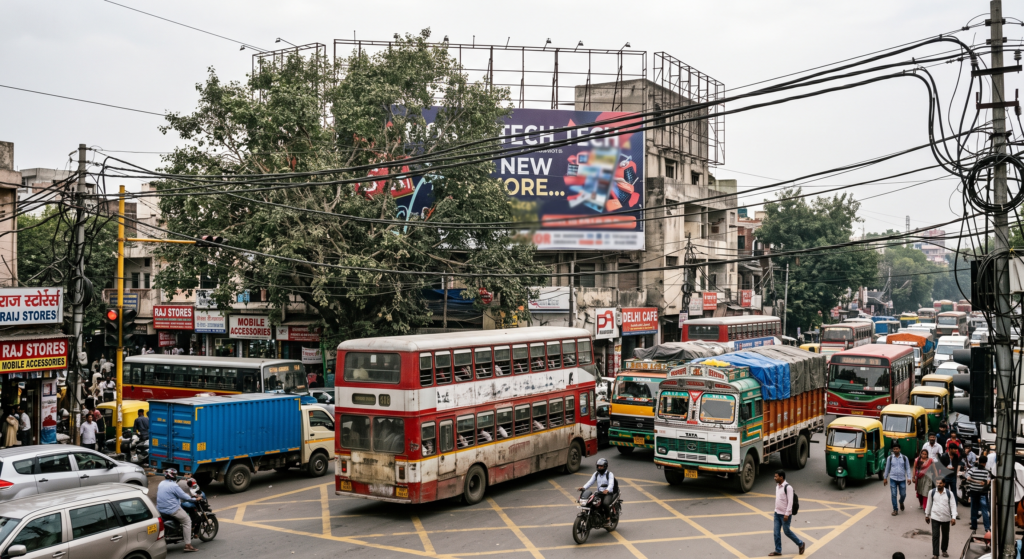
Choosing the Wrong Size: A small hoarding on a wide highway often disappears among surrounding structures.
Size should match viewing distance.
No Clear Call-to-Action: People should know exactly what to do next:
Visit a website.
Call a number.
Scan a QR code.
Visit a nearby store.
Copying Competitors: Every business has different goals.
Your strategy should reflect your own audience, positioning, and budget.
Ignoring Local Culture: Campaigns perform better when visuals and messaging connect with local audiences.
Poor Color Contrast: Low-contrast designs become difficult to read from a distance.
Bold, high-contrast combinations improve visibility.
No Integration with Digital Marketing: Outdoor campaigns become more effective when supported by:
Social media
Google Ads
Landing pages
QR codes
Local SEO
Together, they reinforce the same message across channels. Avoid Outdoor Advertising Mistakes While Planning.
Focusing Only on Impressions: High traffic doesn’t automatically mean high conversions.
Quality of audience matters more than quantity.
Ignoring Seasonal Demand: Advertising during festivals, admissions, real estate launches, and shopping seasons often delivers stronger engagement.
Not Planning Multiple Touchpoints: People rarely take action after seeing an advertisement once.
Combining billboards, buses, metro panels, and bus shelters increases frequency and recall.
Working Without a Strategy: The biggest mistake of all is treating outdoor advertising as a one-time purchase instead of a planned marketing investment.
Strategy determines success—not simply the number of advertising spaces booked. Avoid Outdoor Advertising Mistakes While Planning.
Outdoor Advertising Planning Checklist
Before launching your campaign, confirm that you have:
| Planning Element | Status |
|---|---|
| Campaign objective defined | ✔ |
| Target audience identified | ✔ |
| Best locations shortlisted | ✔ |
| Traffic study completed | ✔ |
| Creative tested for readability | ✔ |
| Brand guidelines followed | ✔ |
| Campaign duration finalized | ✔ |
| Budget allocated wisely | ✔ |
| Performance metrics selected | ✔ |
| Reporting process established | ✔ |
How to Avoid These Mistakes
The simplest way to avoid expensive errors is to approach outdoor advertising as a strategic process rather than just a media purchase. Research locations thoroughly, understand audience movement, choose the right mix of advertising formats, design creatives specifically for outdoor viewing, and monitor campaign performance throughout its duration. Regular reviews allow you to optimize placements, messaging, and budgets instead of waiting until the campaign ends.
FAQs- Avoid Outdoor Advertising Mistakes While Planning
1. How do I choose the best location for outdoor advertising?
The best location depends on your target audience rather than just traffic volume. Analyze where your ideal customers travel daily, whether it’s office routes, residential areas, shopping districts, highways, or metro stations. A location that reaches the right audience consistently will deliver better ROI than a high-traffic location with irrelevant viewers.
2. What is the biggest mistake businesses make in outdoor advertising?
The most common mistake is launching a campaign without a clear objective. Many businesses book billboards or transit media simply because the space is available, without defining whether they want to increase brand awareness, generate leads, promote a product launch, or drive store visits. A campaign without a clear goal is difficult to optimize or measure.
3. How long should an outdoor advertising campaign run?
For effective brand recall, most outdoor advertising campaigns should run for at least 4–8 weeks. This duration allows people to see the advertisement multiple times during their daily commute, increasing familiarity and improving the chances of customer action.
4. How can I measure the success of an outdoor advertising campaign?
You can evaluate campaign performance by tracking metrics such as inquiry calls, website visits, QR code scans, store footfall, lead generation, branded search volume, and sales growth. Comparing these results before and after the campaign provides a clearer picture of its effectiveness.
5. Which outdoor advertising medium offers the best ROI?
There is no single format that works for every business. Billboards are excellent for mass visibility, bus branding offers repeated exposure across the city, metro advertising reaches daily commuters, while pole kiosks and bus shelters are ideal for hyperlocal branding. The best ROI comes from choosing the medium that aligns with your campaign goals and target audience.
6. Should outdoor advertising be combined with digital marketing?
Yes. Outdoor advertising performs significantly better when supported by digital channels such as Google Ads, social media campaigns, local SEO, landing pages, and QR codes. This integrated approach increases customer engagement, improves attribution, and helps convert offline visibility into online inquiries and sales.
7. How can I avoid wasting my outdoor advertising budget?
Start with a well-defined strategy instead of selecting locations based only on cost. Research your target audience, choose high-visibility placements, create simple and impactful creatives, and monitor campaign performance regularly. Strategic planning helps maximize exposure and ensures your budget is invested where it delivers the greatest impact.
8. Why is creative design important in outdoor advertising?
Outdoor advertisements are usually viewed for only a few seconds, especially by people in moving vehicles. A clean design with a bold headline, high-contrast colors, minimal text, and a clear call-to-action makes the message easy to understand and improves brand recall. A cluttered design, on the other hand, often goes unnoticed even in premium locations.
Website: www.acmeadvertiser.com
LinkedIn: Acme Advertising Co